- Shreya Solenkey
- Shlok Patwa
Back
India’s EV Transformation: FAME to PM E-DRIVE
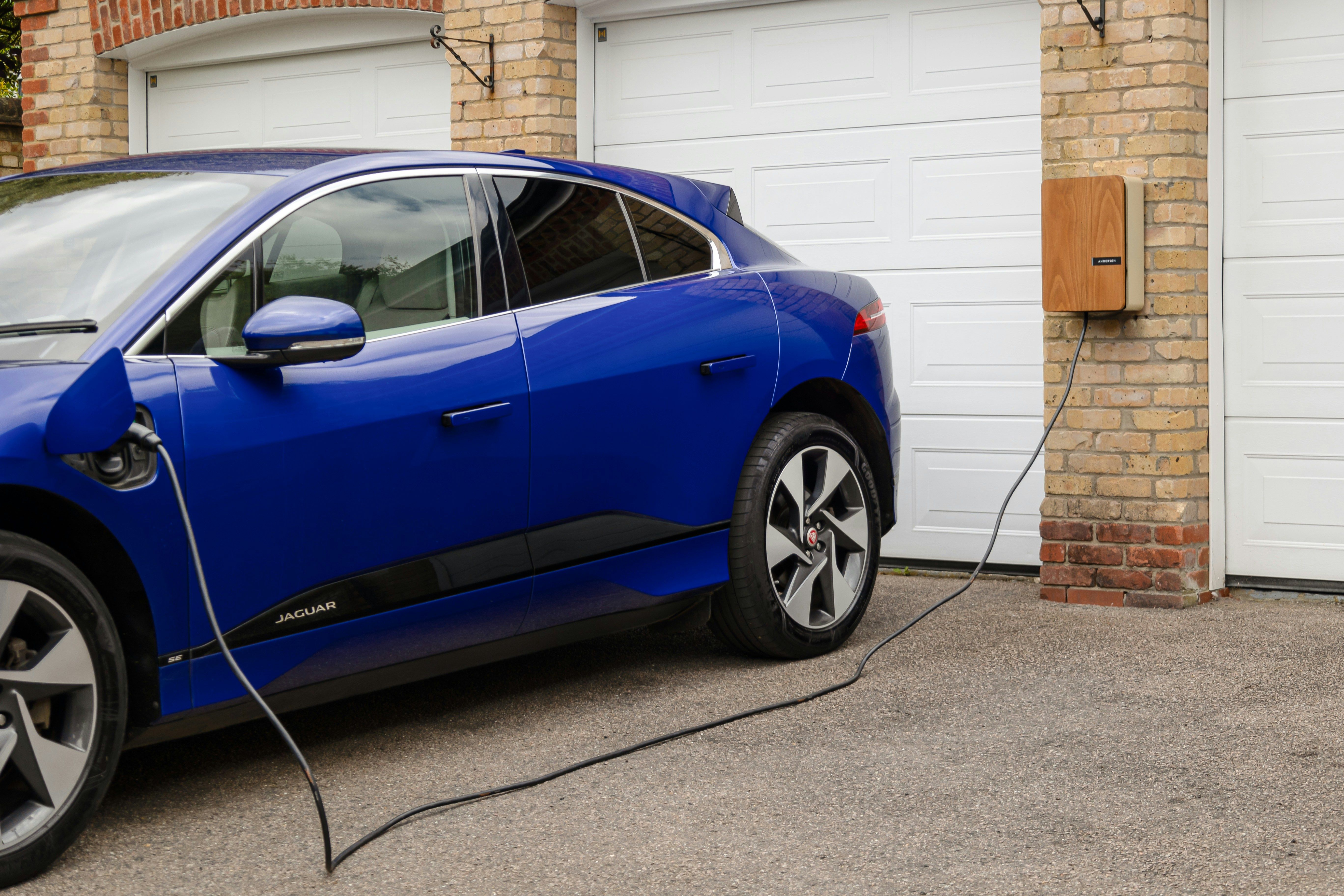
India has decided to aggressively move towards electric mobility with a view to benefit, inter alia, from (a) reduced dependency on imported fuel; (b) increased share of renewable energy by leveraging the storage capacity of electric vehicle (“EV”) batteries; (c) reduced greenhouse gas (“GHG”) emissions; and (d) improved air quality. For this, India seeks to achieve a 30% share of EVs in total vehicle sales by 2030. Sale of EVs in India has increased from 50,000 units sold in 2016 to 2.08 million units sold in 2024 as against global EV sales having increased from 918,000 in 2016 to 18.78 million in 2024[i].
India’s EV market continues to accelerate in 2025, building on the momentum of the previous year. The latest full‑year numbers show that India sold about 2.04 million EVs in FY 2024-25, accounting for roughly 7.8% of all vehicle sales[ii]. Early 2025 data indicates that India sold more than 600,000 electric 2‑wheelers and over 360,000 electric 3‑wheelers in the first half of the year, pushing the market past 1 million EVs within 6 months[iii]. Passenger EVs are also expanding steadily, with electric cars reaching nearly 5% of India’s car sales in early FY 2025-26[iv].
The slower adoption of EVs in earlier years may be attributed to the higher cost of EVs compared to internal combustion engine vehicles, range anxiety, lack of robust charging infrastructure, and production‑end bottlenecks faced by manufacturers in sourcing critical components.
Evolution of Government Initiatives to Achieve Increased EV Sales
India’s rapid rise in EV adoption over recent years has been driven in large part by the Government of India’s sustained policy support through financial outlays, demand incentives, and fiscal measures aimed at making EV more affordable. This policy journey began formally with the launch of the National Electric Mobility Mission Plan 2020 (NEMMP) in 2013, where the government set a vision of achieving 6-7 million hybrid and EV sales annually by 2020. Although those targets were aspirational at the time, the NEMMP laid the foundation for a decade of successive schemes - FAME I, FAME II, EMPS, and now PM e‑DRIVE.
Each scheme was not designed in isolation. Instead, each programme responded to practical constraints, market realities, and ecosystem gaps revealed during the previous phase. The result is a decade‑long thread of policy evolution where later schemes corrected shortcomings and institutionalised learnings of earlier ones.
Starting with FAME I, the scheme focused on four pillars, namely, demand incentives, pilot projects, technology development, and charging infrastructure, with demand subsidies and pilot deployments forming the core instruments to kick‑start early EV adoption[v]. As adoption grew but localisation and infrastructure bottlenecks became evident[vi], the government rolled out FAME II, which added stronger incentives across vehicle categories and introduced manufacturing‑linked measures to encourage local component production[vii]. Recognising the need for continuity and to avoid a policy vacuum, the interim Electric Mobility Promotion Scheme (EMPS) provided short‑term demand support while the next programme was being finalised[viii].
Under the PM e‑DRIVE scheme, the Government broadened the scope of its EV policy by integrating demand incentives with capital grants for e‑buses, support for charging‑infrastructure development, and detailed Domestic Value Addition (DVA) requirements intended to strengthen the domestic manufacturing ecosystem[ix]. The scheme includes strict localisation provisions to ensure manufacturers undertake genuine production within India rather than relying on semi‑knocked‑down (SKD) or completely‑knocked‑down (CKD) assembly. By linking incentives to meaningful value addition such as battery‑pack assembly, BMS integration, traction‑motor manufacturing, and critical electronics, PM e‑DRIVE seeks to anchor a deeper EV supply chain in India and promote long-term industrial capability.
Challenges Under PM e‑DRIVE
As India’s EV ecosystem transitions into a more mature phase, PM e‑DRIVE has surfaced practical challenges. The swift introduction of localisation thresholds and component‑level verification requirements has created compliance uncertainties for OEMs and especially Tier‑2 and Tier‑3 suppliers[x]. India’s domestic capacity for critical components such as battery modules, power electronics, thermal systems, and semiconductors, remains limited, making certain localization timelines difficult to meet. Infrastructure constraints particularly the pace of public‑charging deployment and grid‑upgrade requirements continue to influence the pace of the market towards EVs.
While the Ministry of Heavy Industries has issued interim updates and clarifications on localisation rules, including guidance on what constitutes genuine manufacturing versus SKD/CKD assembly, industry stakeholders continue to await more detailed, long‑term guidance on compliance expectations, inspection processes, and transitional pathways. As of now, a comprehensive set of guidelines addressing these operational challenges has not been released.
Looking ahead, the success of India’s EV transition will depend on the timely alignment of policy clarity with industry capacity. As manufacturers and suppliers scale investments, deepen localisation, and navigate the new compliance framework under PM e-DRIVE, clearer and consolidated guidance on documentation, verification, and transitional provisions will be critical. Providing this clarity will not only offer regulatory certainty but will also help ensure that the localisation objectives of PM e-DRIVE translate into a stable, competitive, and truly domestic EV manufacturing ecosystem.
[i] Unlocking a $200 Billion Opportunity: Electric Vehicles in India, NITI Aayog, August 2025, available at https://niti.gov.in/whats-new/unlocking-200-billion-opportunity-electric-vehicles-india
[ii] EV Reporter, India EV Report FY 2024–25, EVReporter.com, May 2025.
[iii] Autocar Professional, EV sales in India race past a million units in first half of CY2025, AutocarPro.in, 2025.
[iv] The Times of India, At 5% EV share, electric car sales nearly double in a year, Times of India, 2025.
[v] Scheme for Faster Adoption and Manufacturing of (Hybrid &) Electric Vehicles in India – FAME India, available at https://heavyindustries.gov.in/sites/default/files/2023-09/OM_FAME_India.PDF
[vi] Standing Committee on Heavy Industries (2018), 39th Report, noting India’s continued dependence on imported EV components and the slow pace of charging infrastructure deployment under FAME I and NITI Aayog EV Readiness Reports (2017–2018), highlighting insufficient charging infrastructure and lack of domestic battery and component manufacturing capabilities prior to FAME II.
[vii] Faster Adoption & Manufacturing of Electric Vehicles in India, Ministry of Heavy Industries https://heavyindustries.gov.in/en/fame-ii
[viii] Ministry of Heavy Industries Electric Mobility Promotion Scheme 2024, https://heavyindustries.gov.in/en/ministry-heavy-industries-electric-mobility-promotion-scheme-2024
[ix] Operational Guidelines for PM Electric Drive Revolution in Innovative Vehicle Enhancement (PM E-DRIVE) Scheme, available at https://pmedrive.heavyindustries.gov.in/docs/policy_document/Operatioal%20Guidelines%20dt.%2030.09.2024%20for%20P%20E-DRIVE.pdf
[x] PM e-DRIVE: Component suppliers can now be inspected under new EV policy, The Economic Times,https://economictimes.indiatimes.com/industry/renewables/pm-e-drive-component-suppliers-can-now-be-inspected-under-new-ev-policy/articleshow/114057022.cms