The Law on Passport Surrender in Bail Applications
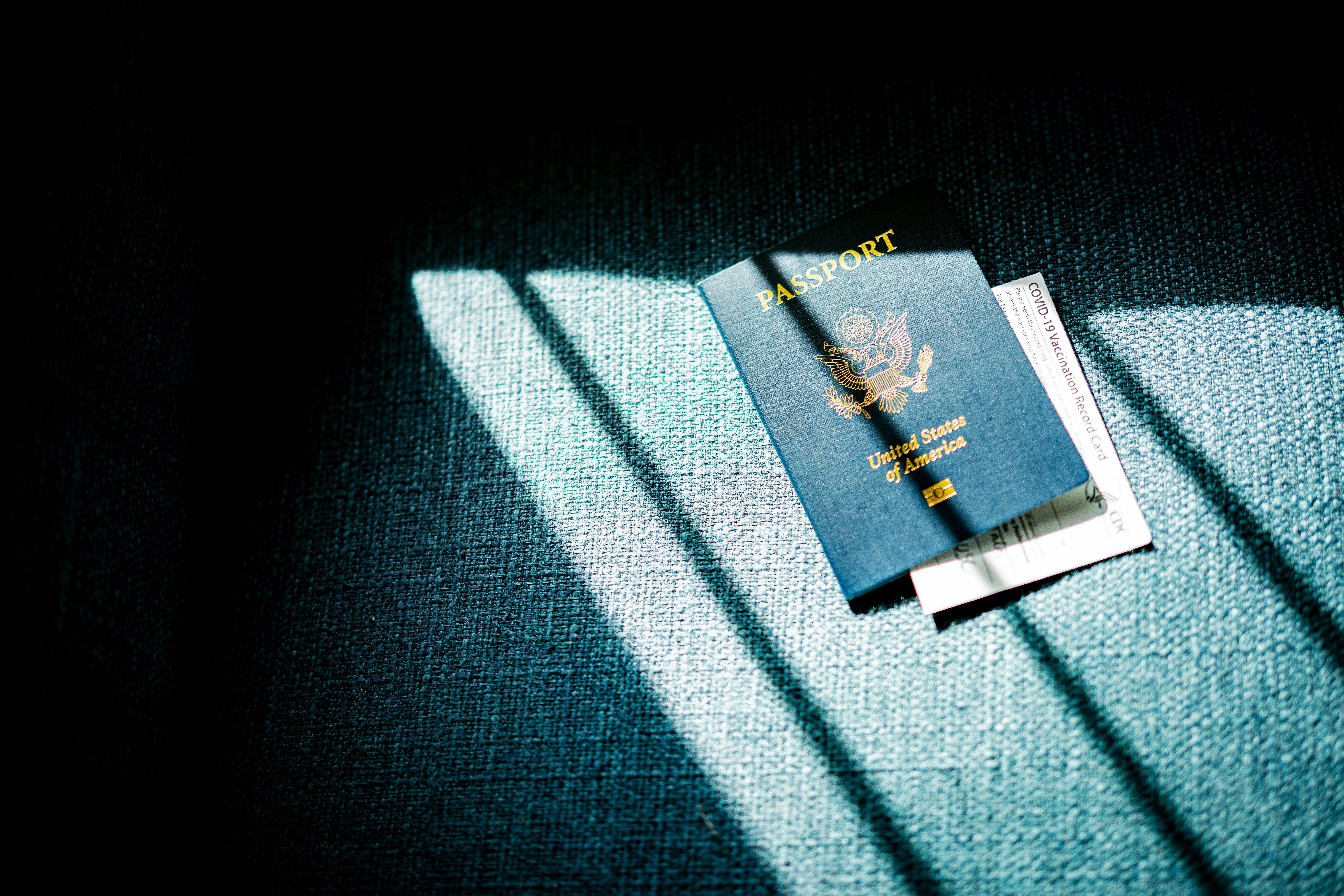
Courts across India routinely impose bail conditions to secure the presence of an accused during trial. One such condition — directing an accused to surrender their passport — has long been a subject of legal debate. A recent order from the Madurai Bench of the Madras High Court in Raja v. Inspector of Police has brought this issue back into sharp focus, reaffirming a settled but frequently overlooked principle of law.
Facts of the Case:
The petitioner, Raja, was arrested on 23 December 2025 and remanded to judicial custody for offences under Sections 294(b), 417, and 506(i) of the Indian Penal Code. He was subsequently granted bail by the Sessions Court on 10 January 2026.
Following his release, the petitioner approached the Sessions Court seeking modification of the bail conditions. By an order dated 11 February 2026, the Sessions Court modified the conditions as follows:
- The petitioner shall not leave India without prior permission from the concerned Court.
- The petitioner shall surrender his passport to the jurisdictional Magistrate Court.
- The petitioner shall appear and sign before the respondent police station weekly, every Monday at 10:00 a.m., until further orders.
Aggrieved by Condition No. 2, the petitioner filed a petition before the Madurai Bench of the Madras High Court under Section 483(1) read with Section 528 of the Bharatiya Nagarik Suraksha Sanhita (BNSS), seeking to set aside the passport surrender condition.
The Legal Argument:
The petitioner's counsel argued that directing an accused to surrender their passport as a bail condition is contrary to law on two grounds:
- It violates Article 21 of the Constitution of India, which guarantees the right to personal liberty, including the right to travel abroad.
- Under Section 109 of the BNSS, a court has no power to impound a passport. The Passports Act, 1967 is a special legislation that exclusively governs the impounding of passports, and only the passport authorities designated under that Act are competent to do so.
The petitioner relied on two key precedents to support this position:
- Suresh Nanda v. Central Bureau of Investigation, reported in (2008) 2 SCC (Cri.) 121.
- Praveen Surendiran v. The State of Karnataka, Criminal Petition No. 1892 of 2022.
What the Court Held:
The Hon’ble Madras High Court (Madurai Bench) after carefully examining the cited judgments, upheld the petitioner's contention. The Court's reasoning rested on a foundational principle of statutory interpretation: special law prevails over general law.
The Court observed that while Section 104 of the Code of Criminal Procedure (the predecessor provision to the current BNSS) permits a court to impound any document or thing produced before it, this power does not extend to passports. Impounding of a passport is specifically governed by Section 10(3) of the Passports Act, 1967 — a special legislation — and therefore falls exclusively within the domain of passport authorities. A trial court, while granting bail, cannot impose a condition requiring deposit of a passport. If a court wishes to have a passport impounded, it must do so through the concerned passport authorities.
Accordingly, Condition No. 2 — directing the petitioner to surrender his passport to the jurisdictional Magistrate Court — was set aside. Conditions No. 1 and No. 3 (the travel restriction and the weekly reporting requirement) were left intact.
Why the Ruling Is Significant
This decision is a timely reminder that bail conditions, however well-intentioned, must be grounded in legal authority. Courts cannot exercise powers that the legislature has expressly vested in a separate, specialised authority. The passport surrender condition, though commonly imposed in practice, has no statutory backing when directed by a criminal court and this judgment makes that unambiguously clear.