Back
Open to the Sky, Not Necessarily on the Ground: Bombay High Court on Recreational Spaces in Redevelopment
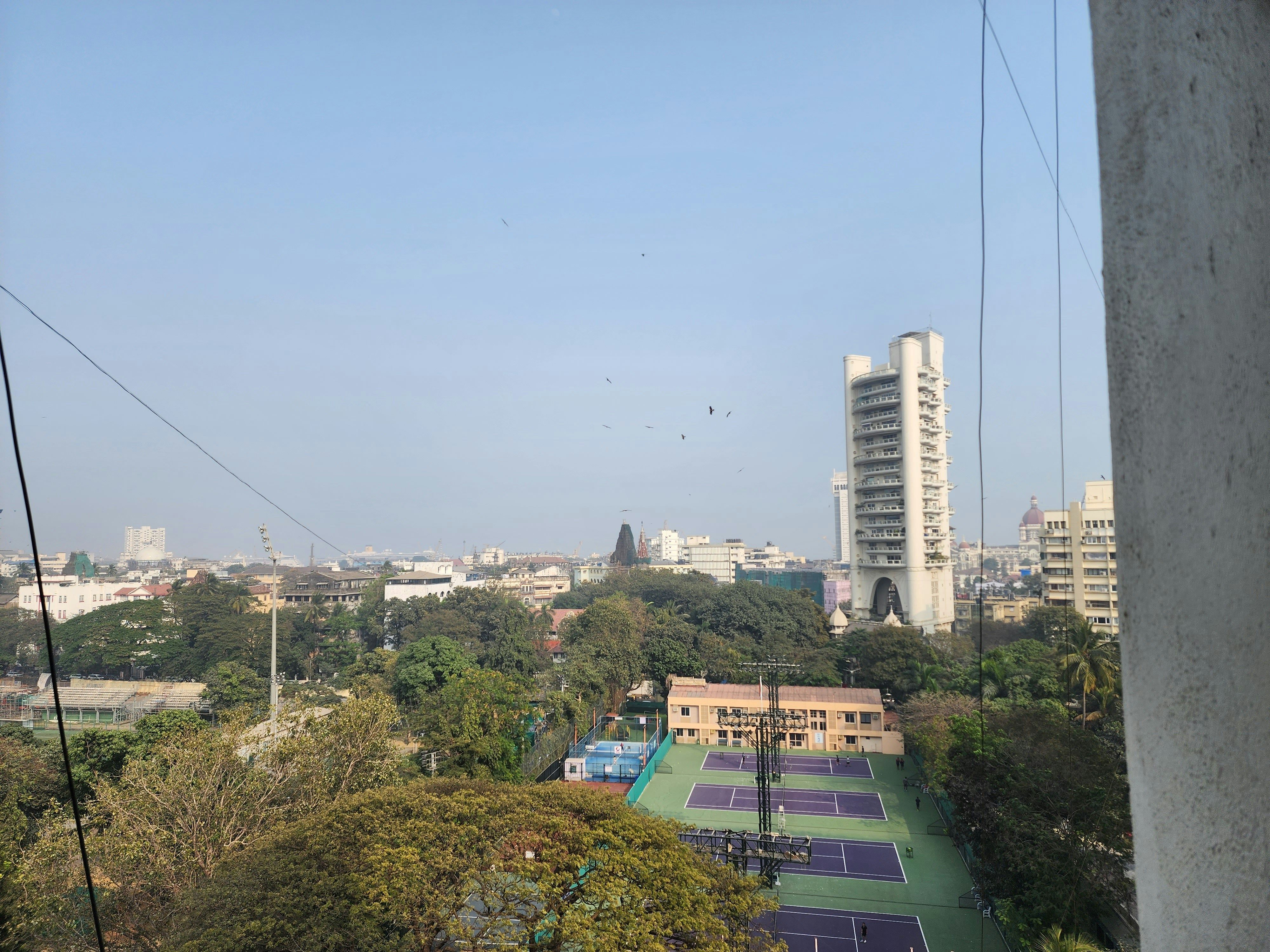
- In redevelopment projects, the location of recreational open space can be as contentious as its size. Must residents have access to an open area at ground level, or can an open-to-sky podium serve that purpose? In Sandeep S. Thakur v. State of Maharashtra & Others, Public Interest Litigation No. 26 of 2024, pronounced on 1 October 2026, the Bombay High Court examined this question in the context of redevelopment in Navi Mumbai under the Unified Development Control and Promotion Regulations, 2020 ("UDCPR"). The Court dismissed the challenge to the development permissions, accepting the provision of recreational open space at podium level within the applicable regulatory framework.
- The petition challenged permissions granted to five housing societies. Its central grievance was not that recreational open space ("ROS") had been entirely omitted, but that NMMC had permitted the required space to be provided at podium level rather than on the ground. The petitioner argued that this would push residents towards public recreational spaces, increase pressure on those facilities and undermine planned development.
- The controversy arose from Regulation 10.10.2(3)(vi), which addresses redevelopment in CIDCO/NMMC areas. It requires a minimum of 10% or 15% compulsory ROS, depending on the land area, "on ground clearly open to sky over and above podium garden". Read in isolation, this wording appears to support a distinction between ground-level recreational space and a podium garden. The petitioner relied on that distinction, together with Chapter 10’s overriding language, to challenge the concessions.
- The Court, however, did not interpret this provision in isolation. It examined the wider framework, including Regulation 3.4.1(iii), which permits ROS on a podium terrace. That regulation also allows the entire ROS to be located on the podium where the owner or developer provides a 1.5-metre strip along the plot boundary for tree plantation, exclusive of marginal distances. Regulation 9.13 similarly recognizes podium-level ROS, subject to the prescribed conditions.
- In paragraph 34, the Court held that 100% ROS could be provided at podium level, provided it was entirely open to the sky. Reading Regulations 10.10.2(3)(vi), 9.13, 3.4.1(iii) and 3.4.7 with the definition of "podium", it interpreted the words "over and above podium garden" as permitting the entire ROS at podium level, provided the podium garden was also supplied. This interpretation formed a central part of the decision.
- The Court also distinguished "open to sky" from "on mother earth". In paragraph 35, it observed that the definition of ROS did not refer to natural ground, mother earth, virgin soil or an at-grade location, nor did it prohibit podium-level provision. Such qualifications, the Court held, could not be introduced into the definition by implication when the regulations themselves did not contain them.
- Another important aspect was the Municipal Commissioner’s discretion under Regulation 2.4. This provision permits modification of prescribed dimensions or provisions where clearly demonstrable hardship exists. However, that discretion is constrained: relaxation must not violate health, fire, structural or public safety requirements. The regulation also expressly restricts relaxation of road-boundary setbacks, FSI and parking requirements, unless otherwise specified.
- The judgment therefore should not be read as unrestricted entitlement to shift recreational space onto a podium. The Court emphasized that Regulation 2.4 must be exercised case by case. It treated a concession as an element of planning discretion, rather than an exemption from the regulatory framework, and found that the concessions under challenge furthered compliance without compromising the identified safety requirements.
- The factual foundation mattered. The respondents identified constraints involving building-height restrictions, surrender of land for road setbacks, mandatory rehabilitation accommodation and parking requirements. The Court found no material from the petitioner showing that these constraints were fabricated or imaginary. For the other challenged redevelopments as well, the petitioner had neither produced material nor asserted that the concession applications relied on concocted data.
- On the interaction between the regulations, the Court rejected the argument that Chapter 10’s non obstante clause excluded the general provisions of the UDCPR altogether. In paragraphs 41 and 49, it explained that the provisions must operate harmoniously, with the overriding clause becoming relevant where an actual conflict arises. General regulations therefore continued to apply to city-specific development insofar as they did not conflict with it.
- The Court additionally observed in paragraph 36 that the expression "Condominium/plot area" in Regulation 10.10.2(3)(vi) was intended to distinguish those areas from co-operative housing societies. It noted that the respondent societies were co-operative housing societies, not condominiums. This was a separate strand of reasoning and should be acknowledged when assessing the judgment’s relevance to a particular redevelopment.
- The claimed impact on public recreational spaces also required evidence. The Court found no factual foundation for the assertion that residents would crowd public open spaces merely because their project’s ROS was not at ground level. Likewise, it found no demonstrated perversity in the planning authority’s exercise of discretion. The decision thus turned on both regulatory interpretation and the absence of material supporting the alleged adverse consequences.
- Importantly, dismissal of the petition did not translate into unqualified approval of administrative opacity. The Court criticized delayed and vague responses to the petitioner’s information requests and stressed that public authorities must be transparent. It also recognized the value of civic participation and suggested dialogue, community oversight and digital communication as ways to improve accountability.
- For redevelopment stakeholders, the practical lesson is to distinguish regulatory flexibility from regulatory avoidance. The judgment supports podium-level ROS in the circumstances examined, but its reasoning rests on the applicable provisions, demonstrable planning constraints, case-specific discretion and safety safeguards. For those challenging such permissions, a textual objection alone may be insufficient: the record must establish why the concession is unlawful or unjustified. The broader message is that flexibility in redevelopment must remain reasoned, documented and transparent — not merely convenient.